AI in Logistics: Smarter Supply Chains with Less Human Input
Author:sana
Released:March 20, 2026
Artificial intelligence is no longer some far-off idea for logistics. It is already shaping how supply chains operate. The numbers show just how fast this shift is happening. The global AI in logistics market was worth around $34 billion in 2025 and is expected to approach $48 billion in 2026. Meanwhile, generative AI in logistics is projected to rise from $0.8 billion to $1.06 billion in just one year.
But what do these numbers actually mean? AI is not replacing entire supply chains overnight. Instead, it is taking over repetitive tasks, helping teams make better decisions, and making operations faster and more resilient. The companies seeing the biggest gains are not trying to automate everything at once. They are focusing on a few clear problem areas where AI can reduce guesswork, spot risks earlier, and speed up decisions. In 2026, the biggest advantage comes from AI supporting people, not replacing them.
What AI Actually Does in Logistics
1. Demand forecasting
Old-school forecasting meant a lot of spreadsheets and gut feelings. AI flips that. It constantly looks at sales data, IoT sensors, weather forecasts, social media chatter, and promotion calendars to predict what demand will look like.
Some advanced models can give you a decent forecast 60 to 90 days out, using historical shipment data plus economic signals and upcoming events. The bottom line: inventory matches demand better. Less stuff sitting around unsold, fewer “sorry we’re out of stock” moments.
2. Route optimization
We’ve moved way past just finding the shortest road. Modern AI routing updates itself on the fly, reacting to traffic jams, weather, delivery windows, and even how the truck is performing.
Fleets that switched to AI routing in 2025–2026 saved 10–15% on fuel within the first three months. Some platforms even let you type in your delivery requirements in plain English, and the AI figures out the rest.
3. Inventory tracking and replenishment
AI keeps an eye on everything: what’s in your warehouse, what’s coming in, what’s still on the road, and what customers are ordering. If stock is about to run low, the system flags the problem up to two weeks in advance. It tells you exactly which products, which warehouses, and which customer orders are at risk, plus how much revenue is on the line. It can even suggest moving inventory between distribution centers to balance everything out. The result: lower storage costs and fewer stockouts.
4. Shipment monitoring and automated order updates
This is the part customers actually see. One platform has a voice-based AI agent that can call thousands of customers at once to give them personalized delivery updates.
The AI answers questions naturally, can even tell a driver to change the route based on what a customer asks for, and sends live tracking links by text. That saves customer service teams from manually tracking every single order and making endless phone calls—they only need to step in when something really goes wrong.
Examples Across the Supply Chain
These four core abilities turn into real-life applications all over logistics.
Warehouse automation and robotics
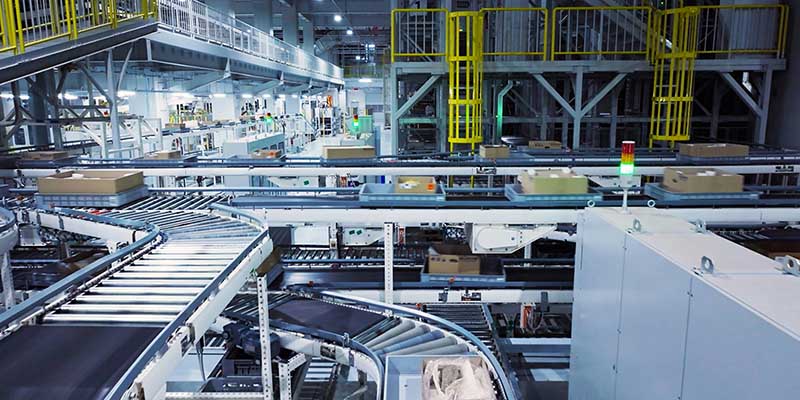
Warehouse robots aren’t just pilots anymore. They’re working at scale. Online fashion retailer Zalando tested AI-powered picking robots and got an average of 10,000 picks per day.
Now they’re rolling them out across their whole network—nine robots already running in 2025, with way more coming in 2026. These robots pick items, scan them, and learn as they go.
The newest generation of warehouse bots, like Locus Robotics’ system, runs 24/7 and works right alongside people in the aisles. They increase throughput while cutting manual labor by 90%. They handle picking, putaway, replenishment, and more—and you can set them up in weeks without redesigning your whole building or adding expensive infrastructure.
Real-time visibility with sensors, digital twins, and data
Knowing where your stuff is at any given moment used to be a luxury. Now it’s a necessity. The modern approach is the “intelligent control tower”—a system that pulls data from across the entire supply chain in real time and uses AI to spot problems before they blow up.
Then there’s the “digital twin,” a virtual copy of your real supply chain that runs in parallel. When a shipment gets delayed, a carrier misses a pickup, or a port gets backed up, the digital twin immediately shows you how that affects your inventory and customer orders. You see the problem, get a suggested fix, and execute it—all without scrambling.
Predictive maintenance for equipment
Nothing kills a day like a truck breaking down unexpectedly. AI-driven predictive maintenance stops that from happening. Sensors on the equipment measure vibration, temperature, pressure, and fuel efficiency. The AI spots unusual patterns and warns you that a part is about to fail.
More than half of logistics providers (51%) say they plan to spend over $100,000 on IoT solutions for exactly this. And the payoff is real: studies show AI can cut downtime by 50% and save up to 30% on maintenance costs.
Automated documentation and freight handling
Paperwork is still one of the biggest headaches in logistics. Generative AI is now stepping in to classify customs forms, check invoices, verify certificates of origin, assign HS codes, and flag mistakes in documents—with very little human help. This makes the biggest difference in cross-border shipping, where rules change depending on the route and the product. AI cuts down the time people spend reviewing documents while making compliance more accurate. It doesn’t need to automate the whole thing to be useful.
Why Businesses Actually Care
When you do AI right in logistics, you get real, measurable benefits.
Lower operating costs
The savings come from a few places. Smarter routing cuts fuel use by 10–15%. Predictive maintenance lowers unexpected repair bills. Automated paperwork reduces manual labor hours. Better forecasting means fewer expensive last-minute fixes.
Faster delivery and smarter routing
Dynamic route updates and real-time problem handling mean shipments show up on time more often. When something goes wrong—traffic, weather, port delay—AI finds an alternative much faster than a person could. In one live demo, an AI route planner took 75 orders and turned them into five efficient routes, cutting both vehicle use and overtime.
Fewer human errors
This is huge. People get tired, stressed, or distracted. AI doesn’t. It processes thousands of variables at once and applies the same logic to every decision. With paperwork, AI catches mismatches a tired employee might miss. With inventory, it flags risks before stock runs out. With routing, it remembers low bridges, hazardous goods rules, and low-emission zones that a rushed dispatcher might forget.
Better service and stronger resilience
Customers get fewer missed delivery windows and get proactive updates when something goes wrong. Supply chains become tougher because AI sees trouble coming earlier.
By looking at past shipments, promotion calendars, weather patterns, and economic signals, AI can predict peak demand 60 to 90 days ahead. That early warning lets companies lock in capacity, adjust staffing, and move inventory before the rush hits.
What Gets in the Way
No technology is perfect. AI in logistics has some real hurdles, and they’re exactly why we still need humans in the loop.
1. Data quality and system integration
Bad data is the #1 reason AI projects fail. Only about 23% of freight professionals say most of their company’s data is clean and reliable. Almost 40% say only about half of their data can be trusted. Poor data quality affects 70% of supply chain AI projects.
Plus, only 55% of companies have a real-time link between their transport management system and other supply chain platforms. AI only works well when it’s built on good, well-connected data. That means companies have to clean up their data mess before AI can actually help.
2. Need for human oversight
AI is powerful, but people are still essential. Take route optimization: AI can crank out alternative routes faster than any planner could, but a human still makes the final decision. Physical stuff still has to move through the real world, and that limits how much you can automate. Even in highly automated warehouses, people and robots work side by side. AI makes humans better at their jobs—it doesn’t replace them.
3. Risks of over-automation
Lean too hard on AI and you create new problems. Systems can fail in unexpected ways. Data pipelines can break. Algorithms trained on past patterns might not see a completely new kind of disruption coming. And there’s a practical issue: if AI handles every routing decision for five years, what happens to the in-house knowledge you need when the system crashes? The smartest supply chains will keep their people skilled, even as they automate.
4. Privacy, trust, and cost
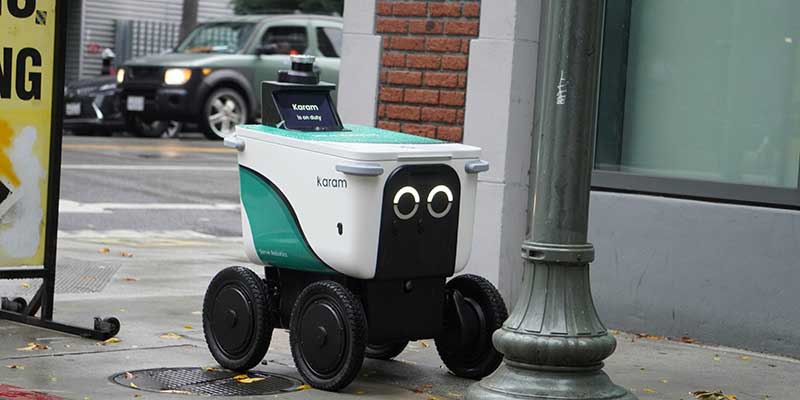
Workers don’t always trust AI. They might see it as a threat to their jobs or an invasion of their workflow. Implementation is expensive. Integration problems, data quality, and high consumption costs are the top barriers people name. And while 61% of companies think they’ll have fully autonomous AI managing their transportation within five years, only 37% have deeply integrated AI today. That gap between dreaming and doing is pretty big.
What Comes Next
So where are we headed? Not full robot takeover. The realistic future is smart collaboration between people and AI.
More autonomous logistics networks.
This won’t happen overnight. About 60% of companies expect to deploy fully autonomous “agentic” AI within five years to hit specific goals, but only 22% have deeply integrated AI into transport processes today. The curve is climbing, but slowly. By 2030, we’ll likely see self-driving robots in lots of warehouses, fully automated route planning for standard shipments, and AI agents handling most routine customer messages.
AI agents making real-time decisions.
The next big thing is “agentic AI”—systems that don’t just analyze data but actually make decisions within set boundaries. They already help with forecasting, inventory management, supplier coordination, and fulfillment. They spot demand shifts earlier and update forecasts more often, well before those changes hit your factory floor or your supplier network. In 2026 and beyond, AI will be built right into transport systems, warehouse platforms, and replenishment tools. The insights will show up inside the software professionals already use.
Human-AI collaboration as the winning model.
The best supply chains of the future won’t be human-free or AI-free. They’ll be designed so that AI handles the predictable, repetitive, data-heavy work. People will focus on strategy, handling exceptions, managing relationships, and solving creative problems. The real value will come from AI systems that generate options, highlight risks, and suggest actions—with skilled humans making the final call.
Don't Miss

AI In Fashion: How Brands Predict Trends Faster Than Ever

Faster Edge AI And Real-Time Intelligence: 2026's Next Big Shift

10 Free AI Tools That Can Replace Photoshop for Quick Image Editing

How Small Businesses Use AI Tools to Cut Costs Fast

AI Vs Traditional Software: What’s The Real Difference People Should Know?